 iORbase 2.0 - Comprehensive Analysis Platform for Insect odorant Receptors
Methodology
This page describes the methodologies and computational approaches used in iORbase 2.0 for insect odorant receptor analysis.
Gene Annotation Pipeline
Methods for identifying and annotating odorant receptor genes from insect genomes.
iGene Annotation Pipeline
The insect odorant receptor (iOR) sequences and structures deposited in the iORPDB module were generated using a stringent dual-filtering strategy that integrates sequence screening and structural validation. First, prior to gene annotation, homologous searches against genomic sequences were performed using Exonerate (v2.4.0) to identify putative iOR-encoding regions. Subsequently, the InsectOR tool, specifically designed for multi-exon gene structures, was employed for iOR gene annotation. To further enhance the reliability of annotation results on top of the structural filtering approach established in iORbase v1.0, we applied an intensified screening pipeline: all annotated iOR sequences were subjected to high-accuracy structural modeling with AlphaFold2, and the resulting model structures were compared against the experimentally resolved reference structure of insect odorant receptor MhOR5 (PDB ID: 7LIC) using Dali for structural alignment. Only models with a Z-score ≥ 20 were retained as high-confidence structures. In addition, the provisionally retained sequences underwent manual curation to eliminate those missing at least seven transmembrane (TM) domains. Through this combinatorial strategy, we effectively excluded false-positive results arising from erroneous genome annotations or incomplete structures, thereby ensuring that the sequence and structural data deposited in iORPDB are of high reliability and biological relevance.
All iOR proteins deposited in iORPDB have passed the above stringent screening pipeline and possess high confidence at the genome annotation level, so as not to mislead users. However, the screening criteria may on occasion be overly conservative, causing some legitimate OR sequences to be excluded. We will continuously supplement and refine the iOR annotation results in each update, with reference to published studies from other groups and through manual inspection.
Function Analysis Methodology
Methods for predicting odor–ligand interactions and evaluating the reliability of docking-based functional annotations.
Validation of Molecular Docking Using Published Experimental Datasets
We assessed the ability of molecular docking to enrich known positive ligand–receptor pairs using two published experimental datasets: Drosophila melanogaster1 and Anopheles gambiae2. These datasets contain OR–ligand activation profiles obtained through heterologous expression and calcium imaging, serving as a reliable benchmark for virtual screening performance.
Calculation of Hit Rate
For each experimentally confirmed positive pair, docking scores (kcal/mol) were computed using Vina-based methods. To evaluate screening performance across different score thresholds, all docking results were sorted from low (strong binding) to high (weak binding) scores and divided into equal-width bins. In each bin, the hit rate was defined as the number of experimentally positive pairs divided by the total number of docking records in that bin. This approach does not rely on any pre‑defined cutoff and objectively reflects the concentration of true positives across the score range. The background distribution of docking scores was derived from approximately 6,000,000 docking records already deposited in our database.
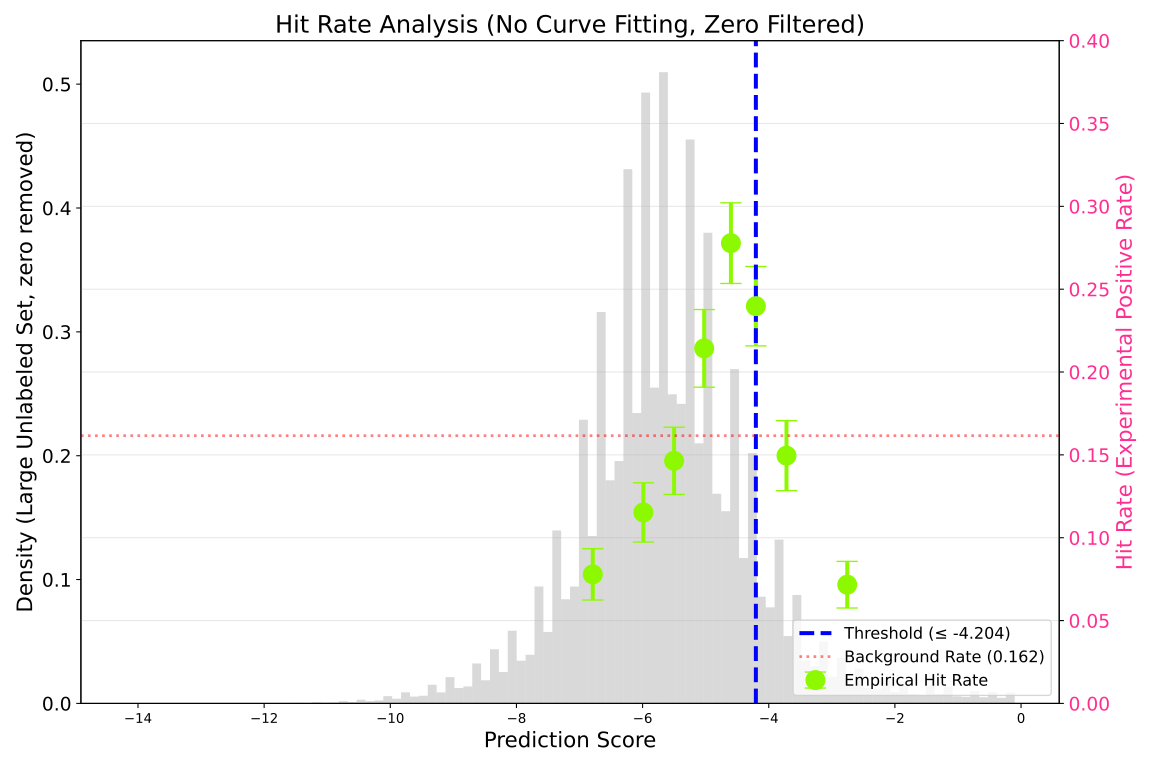
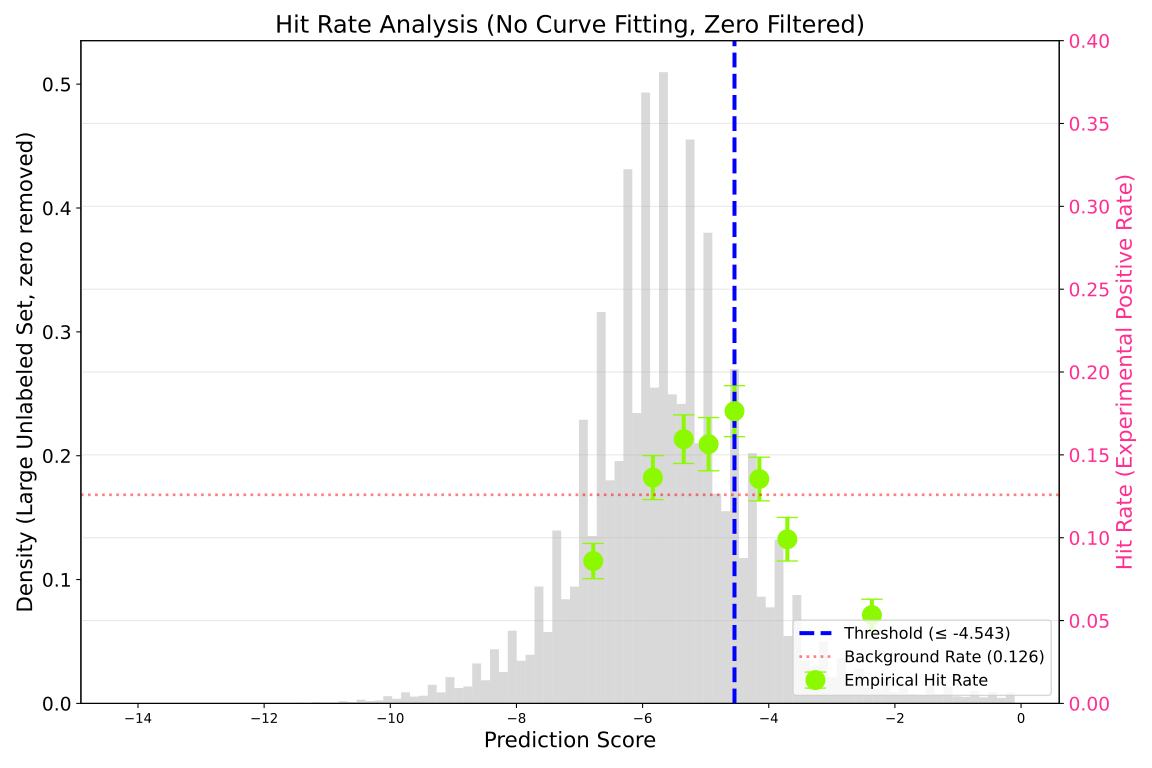
Figure 1. Hit rate distribution curves on the two experimental datasets.
Overall Enrichment Performance
In both datasets, the hit rate exhibited a clear trend: at the lowest score range (i.e., the strongest predicted binding), the hit rate was significantly higher than the random expectation (determined by the overall positive rate in the dataset). In both cases, the maximum hit rate in the low‑score region reached 20%–30%, substantially above random levels. This indicates that, with a proper docking score threshold, molecular docking can effectively enrich true positive results and outperform random selection.
Limitation: The “High‑Score Trap” Phenomenon
However, when extending towards even lower scores (stronger predicted binding), we observed that the hit rate did not continue to rise. Instead, it dropped markedly in the highest‑score region (the top 1%–2% of strongest binders), sometimes falling below random expectation. In other words, a substantial number of ligand–receptor pairs with extremely high docking scores (predicted to bind very strongly) did not show activation in experiments. We refer to these false positives as “high‑score trap” molecules. A statistical analysis of these false positives in the high‑score region revealed systematic differences in several physicochemical properties compared to genuine positives: trap molecules generally had higher molecular weight (MW), a greater number of heavy atoms (HA), and a higher XlogP (i.e., greater hydrophobicity). These three features are strongly correlated with each other, collectively reflecting the combined influence of molecular size and hydrophobicity.
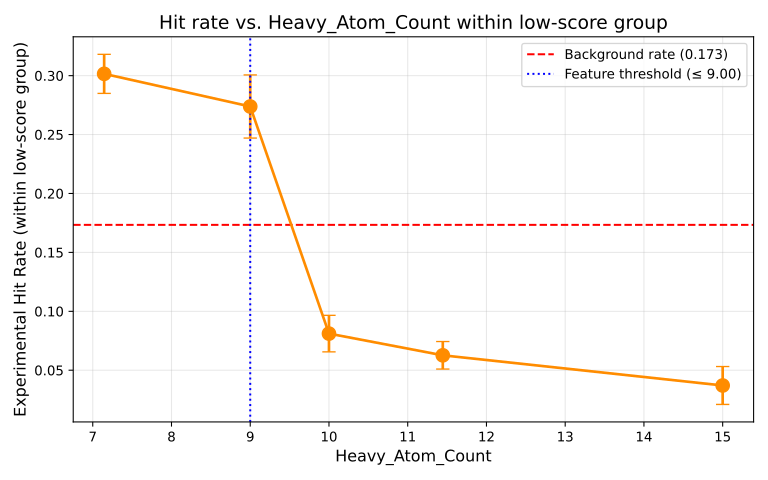
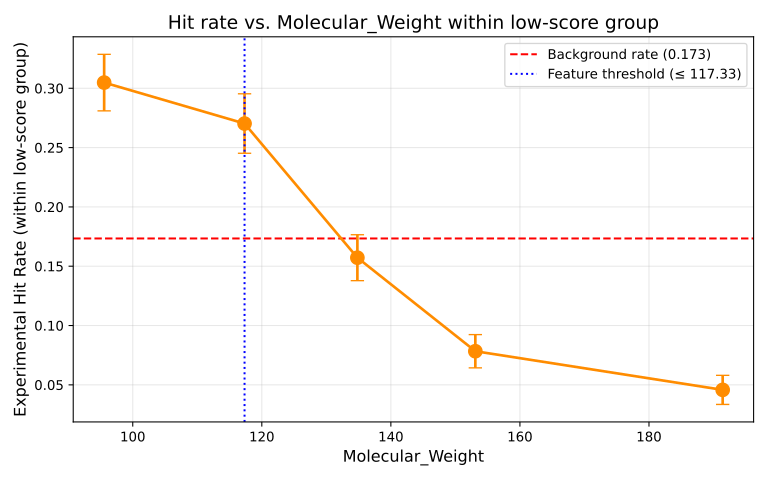
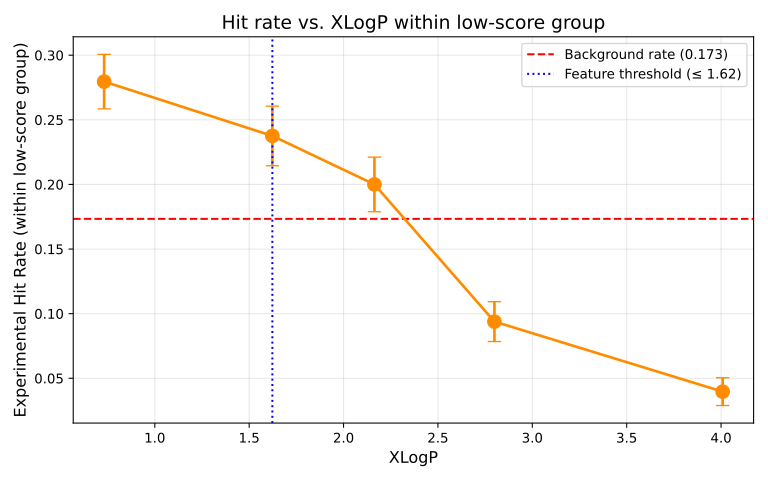
Figure 2. Hit rate distributions of trap molecules at the optimal threshold as a function of molecular features (Drosophila dataset).
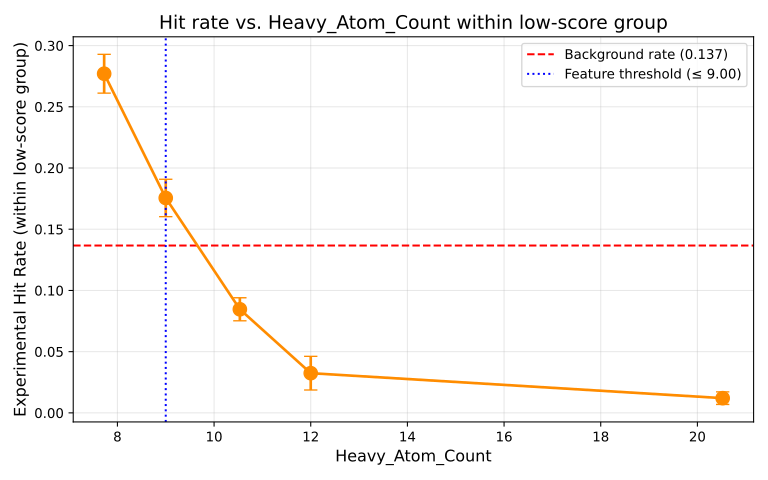
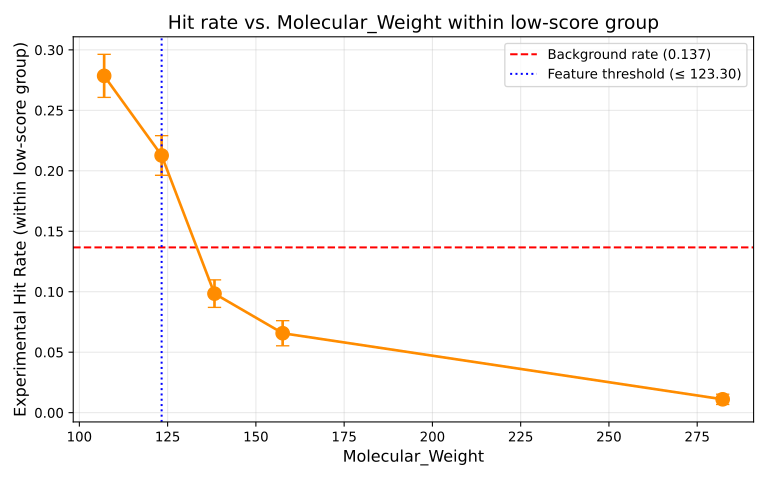
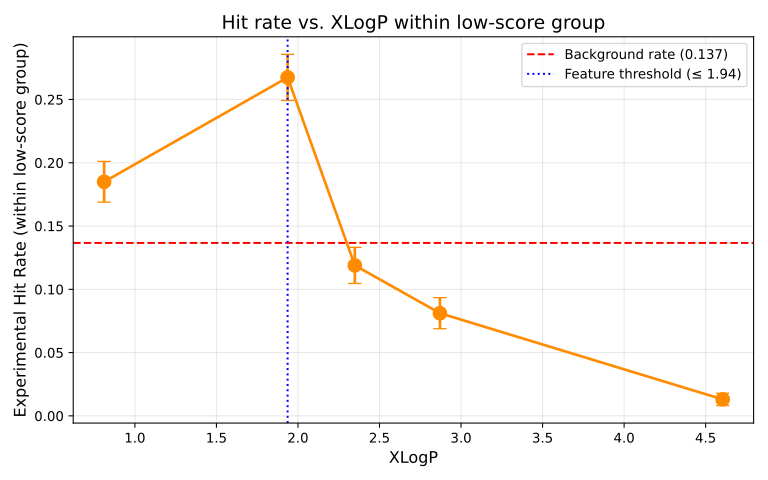
Figure 3. Hit rate distributions of trap molecules at the optimal threshold as a function of molecular features (Anopheles dataset).
Empirical Guidelines and Scope of Application
Based on the statistical analysis of the two experimental datasets, we summarise the following empirical guideline:
when a molecule has an XlogP greater than approximately 1.5–2 and a heavy‑atom count greater than 8–9, the hit rate for positive outcomes drops noticeably.
This suggests that for relatively large and hydrophobic compounds, the docking scoring function tends to overestimate binding affinity, introducing systematic bias. Previous studies have also reported that these molecular properties are associated with inflated docking scores4–6. It should be emphasised that these thresholds are rough references derived from limited experimental data and do not represent strict physical boundaries; moreover, responses may vary among different target proteins.
Overall Assessment of Method Applicability
In summary, we find that molecular docking can effectively distinguish binders from non‑binders in most cases, and its enrichment power is reliable in the low‑score range. However, when users focus on the top‑scoring candidates, caution is advised regarding the “high‑score trap”, especially for compounds with large molecular size and strong hydrophobicity. For such predictions, additional validation (e.g., molecular dynamics simulations or experimental assays) is strongly recommended. We encourage users to interpret docking results in combination with molecular features and experimental design, rather than relying solely on score rankings.
References
- Hallem, E. A. & Carlson, J. R. Coding of Odors by a Receptor Repertoire. Cell 125, 143‑160 (2006).
- Carey, A. F., Wang, G., Su, C.-Y., Zwiebel, L. J. & Carlson, J. R. Odorant reception in the malaria mosquito Anopheles gambiae. Nature 464, 66‑71 (2010).
- Lyu, J. et al. Ultra‑large library docking for discovering new chemotypes. Nature 566, 224‑229 (2019).
- Xu, M., Shen, C., Yang, J., Wang, Q. & Huang, N. Systematic Investigation of Docking Failures in Large‑Scale Structure‑Based Virtual Screening. ACS Omega 7, 39417‑39428 (2022).
- Luo, Q. et al. The scoring bias in reverse docking and the score normalization strategy to improve success rate of target fishing. PLoS One 12, e0171433 (2017).
- Lipiński, P. F. J. & Matalińska, J. J. NK1 receptor binding of a few low molecular weight 3,5‑bistrifluoromethylbenzene derivatives. Acta Pol. Pharm. Drug Res. (2023).